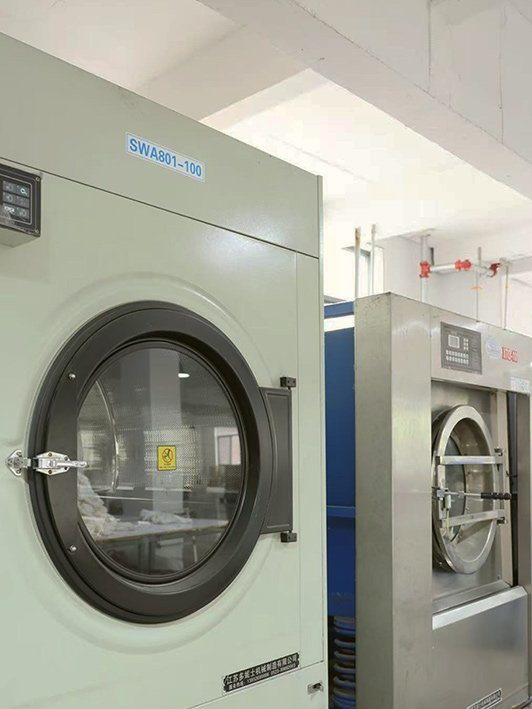
Fine Spun Merino & Fine Spun Cashmere
At CAWOOL STUDIO, brushing is never just about raising nap.
It is about respecting fiber structure, protecting softness, and giving cashmere a second life.
Below, we explain the three brushing techniques we use—and why materials, water, and machinery define the true upper limit of luxury cashmere.
Ply yarn means twisting two or more fine yarns into one stronger, more stable yarn.
It is also the key to creating fancy yarns with rich texture and visual depth.
By combining different fibers, colors, and thicknesses,
the fabric gains a natural melange effect and a more luxurious surface.
Quiet luxury Brands like Brunello Cucinelli often use this technique
to achieve subtle shine, combine wool with sequins,irregular texture, and layered feeling in knitwear.
This requires precise yarn control and knitting programming.
Many mass-production factories cannot handle it.
We have been working with ply yarn structures for years.
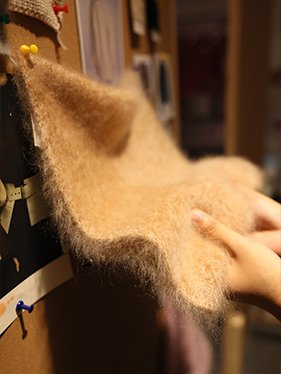
Our Cashmere Brushing Craftsmanship: A Complete Technical Overview
At CAWOOL STUDIO, brushing is never just about raising nap.
It is about respecting fiber structure, protecting softness, and giving cashmere a second life.
Below, we explain the three brushing techniques we use—and why materials, water, and machinery define the true upper limit of luxury cashmere.
Our Cashmere Brushing Craftsmanship: A Complete Technical Overview
At CAWOOL STUDIO, brushing is never just about raising nap.
It is about respecting fiber structure, protecting softness, and giving cashmere a second life.
Below, we explain the three brushing techniques we use—and why materials, water, and machinery define the true upper limit of luxury cashmere.
1.Teasel Brushing: Nature-Inspired Softness
(Plant Brushing / Teasel Raising)
Teasel brushing represents the highest standard of cashmere finishing.
We use dried natural teasel thistles to gently brush the fabric in a controlled, damp environment.
How it works
Teasel hooks have a natural elasticity. When they meet a strong fiber node, the hook breaks instead of tearing the cashmere fiber—unlike metal needles, which pull aggressively and cause damage.
Resulting look & feel
This process preserves the delicate scale structure of cashmere fibers, creating a surface with a natural, water-ripple sheen and a soft, buttery hand feel.
This organic glow and tactile depth cannot be fully replicated by any mechanical alternative.
This technique is widely favored by top luxury brands such as Brunello Cucinelli and Loro Piana, and is best suited for ultra-luxury cashmere garments.
2. Mechanical Brushing: Precision and Efficiency
(Needle Brushing)
Mechanical brushing is the backbone of modern industrial production.
It uses metal or carbon-fiber needles mounted on rotating drums to pull fibers from the yarn surface.
How it works
By adjusting needle depth and drum speed, fibers are raised quickly and evenly.
Best use case
This method prioritizes surface uniformity and production consistency.
However, for ultra-fine baby cashmere below 15 microns, improper settings may damage fibers, reducing long-term durability and wear resistance.
3. Water-Wash Napping: Time-Driven Craftsmanship
(Our Most Valued Technique)
This is the technique we believe in most—and also the one with the highest technical barrier.
Water-wash napping is not about mechanical force. It is about the perfect coordination of water flow, chemistry, and time.
Soft-Water Pre-Treatment
We use specially treated soft water with hardness below 50 ppm.
Gentle clockwise water movement creates controlled fluid friction, allowing hollow cashmere fibers to naturally emerge from within the yarn under water lubrication.
Human Observation & Control
This process is slow and labor-intensive.
Experienced craftsmen monitor fiber density, length, and distribution by eye, adjusting washing rhythm in real time.
Eco-Safe Fixation
When the nap reaches its optimal state, we lock it using EU-compliant, food-grade finishing agents.
The result is a nap that is full, natural, and resilient, with significantly better anti-pilling performance due to minimal mechanical damage.
Why Raw Materials and Equipment Define the Brushing Limit
1.Fiber Structure Matters
Cashmere fibers have an almost perfectly round cross-section and a unique hollow structure.
This gives them exceptional lightness, insulation, and natural antibacterial properties.
When fiber fineness reaches 1/50 the thickness of human hair, any rough finishing will destroy this natural “airiness.”
2. Precision Knitting Is the Foundation
Advanced finishing requires equally advanced knitting.
Compared to standard 2-needle-bed machines, Shima Seiki 5-gauge WHOLEGARMENT® technology allows far more precise loop density and tension control.
This structural stability is essential for water-wash napping, ensuring the yarn core remains strong after fibers are raised.
3. UNDYED Cashmere & Sustainability
In our UNDYED collections, we completely skip high-temperature, acidic dyeing.
Natural lanolin remains intact on the fiber surface.
Under these conditions, water-wash napping fully unlocks the natural dispersion of Tibetan cashmere fibers, delivering an ultra-light, barely-there touch while maintaining sustainability.
Our Philosophy: Brushing as a Second Life for Cashmere
For CAWOOL STUDIO, brushing is not about “more nap.”
It is about precision control — balancing soft water, time, temperature, eco-safe agents, and mechanical force — all while preserving the hollow physical structure of the fiber.
Only then can cashmere truly be reborn.