When a brand starts developing knitwear, one of the first decisions that gets glossed over — or misunderstood — is the choice of construction method.
The common assumption is that construction is a factory-level detail, something the supplier handles and the brand approves. But construction is not a background detail. It is a product decision. It shapes what your garment can look like, how much it costs to make, how it fits, how it scales, and ultimately whether it matches the story you are trying to tell your customer.
This article separates the two core methods clearly, honestly, and in a way that helps you make a better decision for your brand.
TL;DR
- Fully fashioned (including seamless/whole-garment) is a machine-made route. It produces comfortable, precise, clean garments — but design freedom is limited to what the machine can programme.
- Cut & sew is where design value lives. It involves more handwork, costs more, and is the method designer brands reach for when they need to express something machine knitting cannot.
- The question is not “which is better?” — it is “which supports the product I am actually trying to build?”
The Two Core Methods: What They Actually Are
The knitwear industry builds garments using two fundamentally different approaches:
1. Fully Fashioned (including seamless/whole-garment)
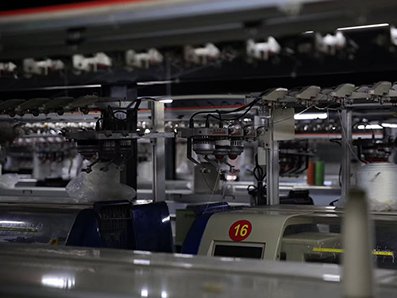
Garment panels are knitted to specific shape on a flat or circular knitting machine. No cutting is involved. The pieces are linked or looped together. In the case of seamless/whole-garment knitting, the entire garment is produced in one piece on a specialised machine such as a Shima Seiki WHOLEGARMENT or STOLL CMS.
2. Cut & Sew
Knitted fabric is first produced in rolls or sheets, then pattern pieces are cut from the fabric and sewn together. This is the method used in mainstream apparel production — and it is also the method that allows the most design freedom in knitwear.
Why This Distinction Matters More Than People Think
Here is the key thing most guides do not say clearly:
Fully fashioned and seamless are machine methods. Cut & sew is a craft method.
That distinction changes everything.
Machine methods are precise, consistent, and increasingly automated. But they are still constrained by what a knitting machine can programme — needle counts, gauge limitations, yarn feeding patterns, and machine capability.
Cut & sew takes knitted fabric and applies garment-making intelligence on top of it. A designer can manipulate fabric behaviour, combine materials, create complex silhouettes, and introduce hand-finishing techniques that no machine programme can replicate. That is why it is the method of choice for designer knitwear and luxury positioning.
Fully Fashioned (Including Seamless): What It Does Well
Fully fashioned — and its close relative seamless/whole-garment knitting — works best in a specific zone.
Where it is strongest
It produces garments with:
- Clean, flat seams (linked or looped rather than sewn), which creates a refined look
- Precise shape control at critical areas: armholes, necklines, shoulder lines
- Minimal fabric waste — panels are knitted to shape, nothing is cut away
- Comfortable, body-adjacent fit — particularly in seamless construction
The comfort case is real
Fully fashioned garments, especially seamless ones, can feel genuinely comfortable against the skin. Without bulky sewn seams, they lie flat against the body. This is why seamless knitting has become associated with base layers, activewear, and next-to-skin luxury garments.
Where it fits
It works best for:
- Premium basics and essential knitwear
- Comfort-led loungewear
- Fine-gauge cashmere basics (12–18 gauge)
- Body-adjacent silhouettes where softness is the primary message
- Clean, minimal design languages
The honest limitation: design complexity
This is where the distinction matters most.
Fully fashioned and seamless knitting are constrained by machine programming. The knitting needle determines what shapes, textures, and structures can be produced. While modern machines like the Shima Seiki WHOLEGARMENT are sophisticated, they still operate within a defined design envelope.
Research on seamless knitting technology notes that it has “great restrictions to the styles with rich shapes due to the limitation of the devices.” Glenmuir, a Scottish heritage knitwear brand, puts it directly: seamless/whole-garment knitting results in garments where “design choices are limited [and] it is difficult to achieve complex structures and refined details.”
In plain terms: if you are building a sweater that needs to express a strong design identity, use complex shaping, combine unexpected textures, or incorporate precision tailoring logic — fully fashioned and seamless will push back.
Cut & Sew: Why It Is the More Interesting Method for Design-Led Brands
Here is the reframe that most people in the industry privately understand but do not always say clearly:
Cut & sew is not the “basic” option. It is the designer’s option.
Yes, cut & sew is used for commercial basics and fast fashion. But that is because it is also the method that gives the most design freedom — not despite it.
What cut & sew enables
Cut & sew construction allows a designer to:
- Create complex silhouettes that no knitting machine programme can produce
- Combine different fabric weights, textures, and materials within one garment
- Introduce structured tailoring logic into knitwear — waistbands, lapels, precision panels
- Apply hand-finishing techniques that differentiate premium from ordinary
- Work from a broader fabric behaviour toolkit rather than machine constraints
As the knitwear.io guide notes, cut & sew scores highest for “design flexibility” — a characteristic that is fundamentally about what the brand can express, not just what the factory can execute efficiently.
Why it costs more — and why that is the point
Cut & sew is more expensive. Here is the honest breakdown of why:
| Cost Factor | Fully Fashioned / Seamless | Cut & Sew |
|---|---|---|
| Machine programming | High — complex patterns need individual programming | Low — fabric is produced without special设定 |
| Labour intensity | High — linking and finishing requires skilled workers | Variable — depends on finishing quality required |
| Material waste | Very low — zero cutting waste | Moderate — 10–20% cutting waste |
| Production speed | Slower — panel-by-panel knitting | Faster per unit for standard programmes |
| Hand-finishing potential | Limited | Extensive — this is where luxury craft lives |
According to industry data, fully fashioned knitwear typically costs 30–50% more than comparable cut & sew programmes.
But here is the nuance that matters: that higher cost in cut & sew is not just inefficiency — it is often investment in craft. Hand-linking, precision seaming, hand-finishing at the collar and cuffs, careful pressing — these are what separate a £200 cashmere knit from a £60 one. And those details only live in cut & sew territory.
Glenmuir, whose premium lines are fully fashioned with hand-finishing, prices its merino and lambswool knitwear at $285–300. The price story is the craft story.
The details that make the price difference
Within cut & sew knitwear, several technical decisions determine whether the result is premium or ordinary:
Linking vs. overlocking
Linked seams (loop-to-loop joining) are flatter and stronger than overlocked seams. Linked garments require skilled operators and more time — which is why linking is consistently associated with higher-quality production.
Coverstitch quality
Coverstitch is used for hem and sleeve attachment. The consistency of the stitch, thread tension, and trimming all affect how the finished garment looks and wears.
Hand-finishing at edges
Premium cut & sew knitwear often involves hand-finishing at collar, cuff, and hem — pressing, checking, and correcting where automated processes cannot reach. This is the equivalent of hand-stitching in leather goods. It is also why comparable-looking garments can have entirely different wear characteristics over time.
Seam placement intelligence
In cut & sew, where seams land is a design decision. Poor seam placement creates bulk and discomfort. Thoughtful seam placement can create structure, visual interest, and comfort. This is a craft decision that experienced developers make deliberately.
Where it fits
Cut & sew construction is the natural home for:
- Designer knitwear with a strong aesthetic identity
- Garments with structured elements — tailoring logic applied to knit fabric
- Complex colourwork or material combinations
- Premium positioning where craft detail is part of the value story
- Brands that want to express something beyond “soft and comfortable”
A More Honest Comparison
Here is the comparison table the industry usually avoids putting in plain language:
| Dimension | Fully Fashioned / Seamless | Cut & Sew |
|---|---|---|
| Design freedom | Limited by machine programme | High — almost anything is possible |
| Complex structures | Difficult | Achievable |
| Craft/storytelling potential | Moderate | Very high |
| Hand-finishing compatibility | Limited | Extensive |
| Comfort (seam feel) | Excellent | Depends on seam quality |
| Silhouette complexity | Basic to moderate | Basic to very complex |
| Cost | 30–50% higher | Lower baseline |
| Premium price justification | Softness + precision | Design identity + craft |
| Best for | Comfort basics, minimal aesthetics | Designer brands, expressive collections |
Which Method Should Your Brand Choose?
The answer is not the same for every brand.
Choose fully fashioned or seamless when:
- Your product concept is comfort-first or minimal
- You are building basics, gifts, or essential knitwear
- The design language is clean, quiet, and lets the yarn do the talking
- You need precise gauge control and shape definition at key areas
Choose cut & sew when:
- You have a design identity to express
- The garment needs to do something visually or structurally that is not a standard silhouette
- Craft and finishing are part of your brand story
- You want to combine materials or create unexpected construction details
- You are building toward a premium price position where craft justifies the number
The honest test:
Show your sketch to a developer in each camp. If the fully fashioned developer says “we can probably do that with some adjustments” — you are likely at the edge of what the machine can do well. If the cut & sew developer says “yes, and we can push it further” — you are in the right territory for design-led development.
How Cawool Approaches Construction Decisions
At Cawool, we treat construction as a product decision, not a factory preference.
When a brand comes in with a sketch or reference, the first honest question is: what is this garment trying to say, and what construction method actually supports that?
Fully fashioned and seamless are excellent routes for comfort-led, minimal, or precision-focused knitwear. We work with both regularly for the right programmes.
Cut & sew is where we see the most interesting design work happen — and it is also where the craft decisions compound. The linking method, the seaming quality, the hand-finishing at the collar — these details are what separate a garment that wears beautifully from one that looks fine in a photo.
We help brands understand not just which method to use, but what each method means for the end product in terms of cost, development timeline, and what the finished piece will actually feel like to wear.
FAQ
Is cut & sew always more expensive than fully fashioned?
Not always — the base unit cost of cut & sew fabric production can be lower. But when cut & sew includes hand-finishing, precision linking, or craft-level detail work, the total production cost typically reaches or exceeds comparable fully fashioned programmes.
Does cut & sew mean lower quality?
No. Cut & sew means different quality levers. A poorly executed cut & sew garment is worse than a good fully fashioned one. A well-executed cut & sew garment with thoughtful seaming and finishing is capable of things fully fashioned cannot achieve.
Why do luxury knitwear brands use fully fashioned + hand-finishing?
Because the combination of machine precision and hand-crafted finishing gives the best result for their product category: clean seams, refined shape, and the craft story that justifies premium pricing. Fully fashioned alone without hand-finishing is still a machine product.
Can seamless knitting produce designer-level complex garments?
Seamless knitting has improved significantly, but it still operates within machine constraints. For garments that need strong design identity, complex silhouette shaping, or material combinations, seamless technology has documented limitations.
What is the most common mistake brands make when choosing construction?
Choosing construction based on cost or what feels familiar, rather than what the garment concept actually requires. A beautifully designed piece built on the wrong construction route will never fully realise its potential.
Final Recommendation
If you are building premium knitwear and you have a design point of view to express, the honest answer is that cut & sew is the more interesting path. It is where craft lives. It is where the details compound. And it is what separates garments that tell a story from garments that fill an order.
Fully fashioned and seamless are excellent for the right brief — comfort-first, minimal, precision-focused. But if your brand is building toward something more expressive, start your development conversation in cut & sew territory.
Not sure which route fits your concept? Send us your sketch or reference photo and we will tell you honestly.